

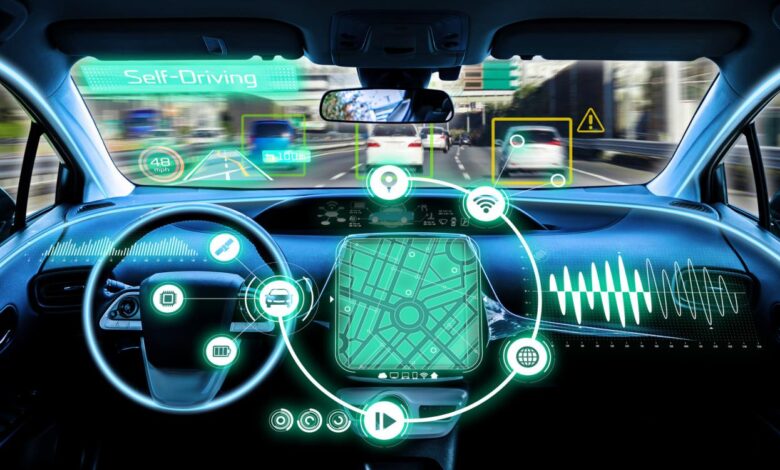
The concept of a self-driving car has captured the public imagination for decades, promising a future where our daily commutes are transformed from a tedious chore into a productive or relaxing experience. While headlines often sensationalize breakthroughs in this technology, the reality of autonomous driving is far more complex and nuanced. We are not yet living in a world of fully driverless cars, but we are well on our way. The industry is navigating a intricate landscape of technological innovation, regulatory hurdles, and public perception. This extensive article will delve into the current state of autonomous driving, exploring the defined levels of automation, the groundbreaking technologies that power them, the real-world applications in use today, and the significant challenges that must be overcome to bring a truly driverless future to fruition.
The Core of the Levels of Automation
To standardize the discussion around autonomous driving, the Society of Automotive Engineers (SAE) created a widely accepted framework. These six levels, from zero to five, define the degree to which a vehicle can operate without human intervention. Understanding these levels is crucial for distinguishing between what is currently on the road and what remains a future aspiration.
- A. Level 0: No Automation. This is the traditional car. The human driver is in full control of all driving tasks, including steering, braking, and acceleration.
- B. Level 1: Driver Assistance. The vehicle provides a single automated system to assist the driver. A prime example is adaptive cruise control, which can automatically maintain a set speed and follow a safe distance from the car in front. The driver is still responsible for all other aspects of driving.
- C. Level 2: Partial Automation. The car can automate a combination of tasks, such as steering and acceleration/braking simultaneously. Systems like lane-keeping assist and traffic jam assist fall into this category. The driver must remain engaged and ready to take over at a moment’s notice. Most new vehicles today are equipped with Level 2 capabilities.
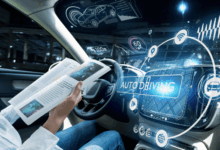
- D. Level 3: Conditional Automation. This is the first level where the driver can take their eyes off the road under specific, controlled conditions, such as on a highway in heavy traffic. The vehicle will handle all driving tasks, but it will request the driver to take over when it encounters a situation it cannot handle. The human must be ready to respond to this request promptly.
- E. Level 4: High Automation. The car can perform all driving tasks within a defined area, known as a geofenced zone. The vehicle does not require the driver to intervene and can pull over safely if it encounters a situation outside its operating capabilities. This is the technology currently being tested by companies in pilot programs for robotaxis and autonomous delivery.
- F. Level 5: Full Automation. This is the ultimate goal: a car that can drive itself anywhere, in any condition, without any human intervention whatsoever. There is no steering wheel or pedals, and the vehicle is capable of navigating any environment, from busy city streets to unpaved rural roads. This level of technology is still in the research and development phase.
The Technological Triad
The progression through these levels is powered by a sophisticated trio of technologies that work together to mimic and surpass human driving capabilities.
A. Sensor Fusion
An autonomous vehicle’s understanding of the world is built through a concept called sensor fusion. This involves a continuous data stream from multiple types of sensors, which are then integrated to create a single, comprehensive view of the environment.
- Cameras: Cameras provide high-resolution visual data, allowing the car’s AI to “see” traffic lights, road signs, lane markings, pedestrians, and other vehicles. They are excellent for object recognition but can be affected by weather conditions like heavy rain or snow.
- Radar: Radar uses radio waves to detect the speed, distance, and direction of objects, even in adverse weather. It is less effective at identifying the type of object but provides crucial information about a vehicle’s immediate surroundings.
- LiDAR: LiDAR (Light Detection and Ranging) uses laser pulses to create a precise, high-definition 3D map of the environment. It is highly accurate and is excellent for detecting stationary objects and creating a detailed understanding of the car’s surroundings. While currently expensive, the cost of LiDAR technology is decreasing, making it more viable for mass production.
B. Artificial Intelligence (AI) and Machine Learning
The massive amount of data collected by the sensors is useless without an intelligent brain to process it. This is where artificial intelligence and machine learning come in. AI algorithms are trained on petabytes of real-world driving data, learning to identify patterns and make instantaneous decisions. The AI must be able to:
- Perceive its surroundings (recognizing pedestrians, reading traffic signals, etc.).
- Predict the behavior of other road users (e.g., predicting that a pedestrian will cross the street).
- Plan a course of action (e.g., deciding to brake, swerve, or accelerate).
- Execute the plan by controlling the vehicle’s systems.The machine learning models are constantly being improved through over-the-air (OTA) updates, ensuring that the car’s intelligence is always at its most current and effective level.
C. Connectivity
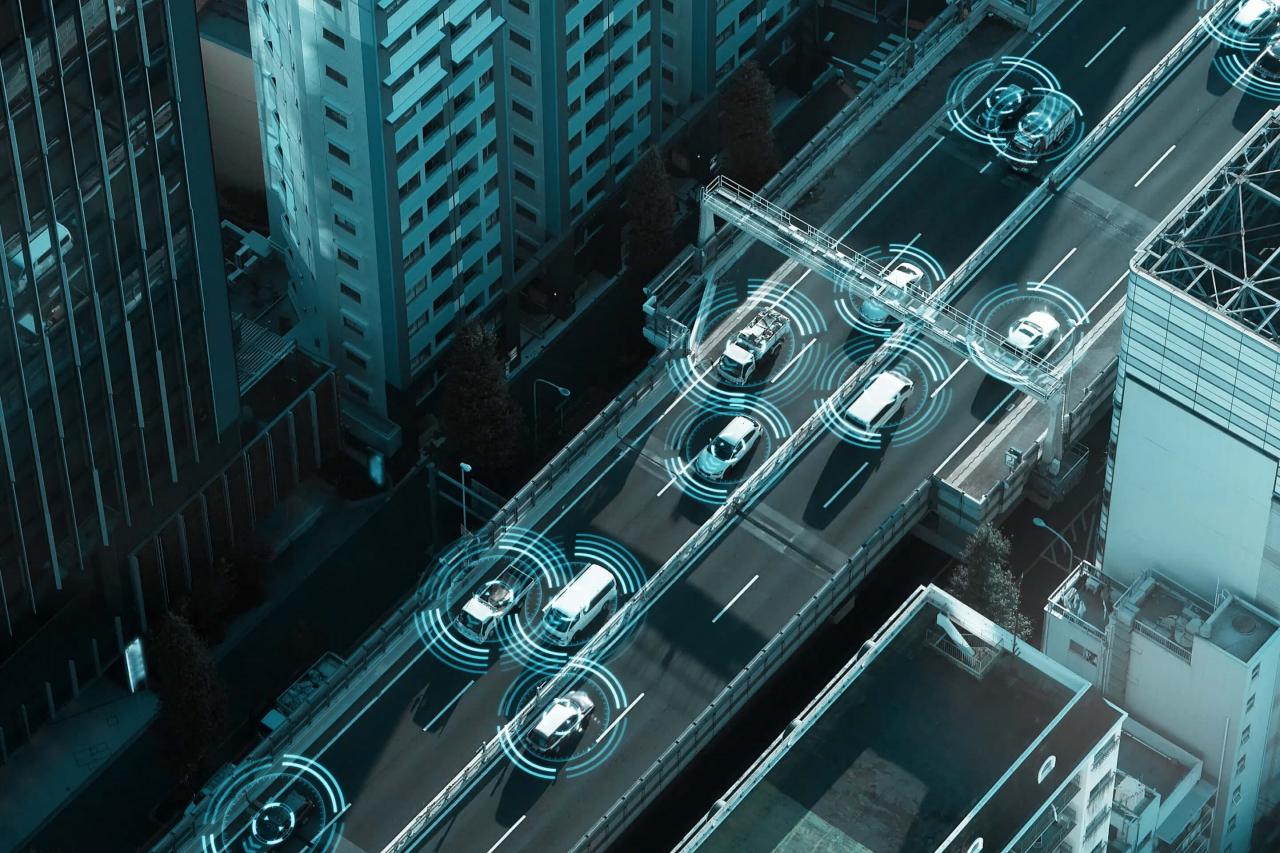
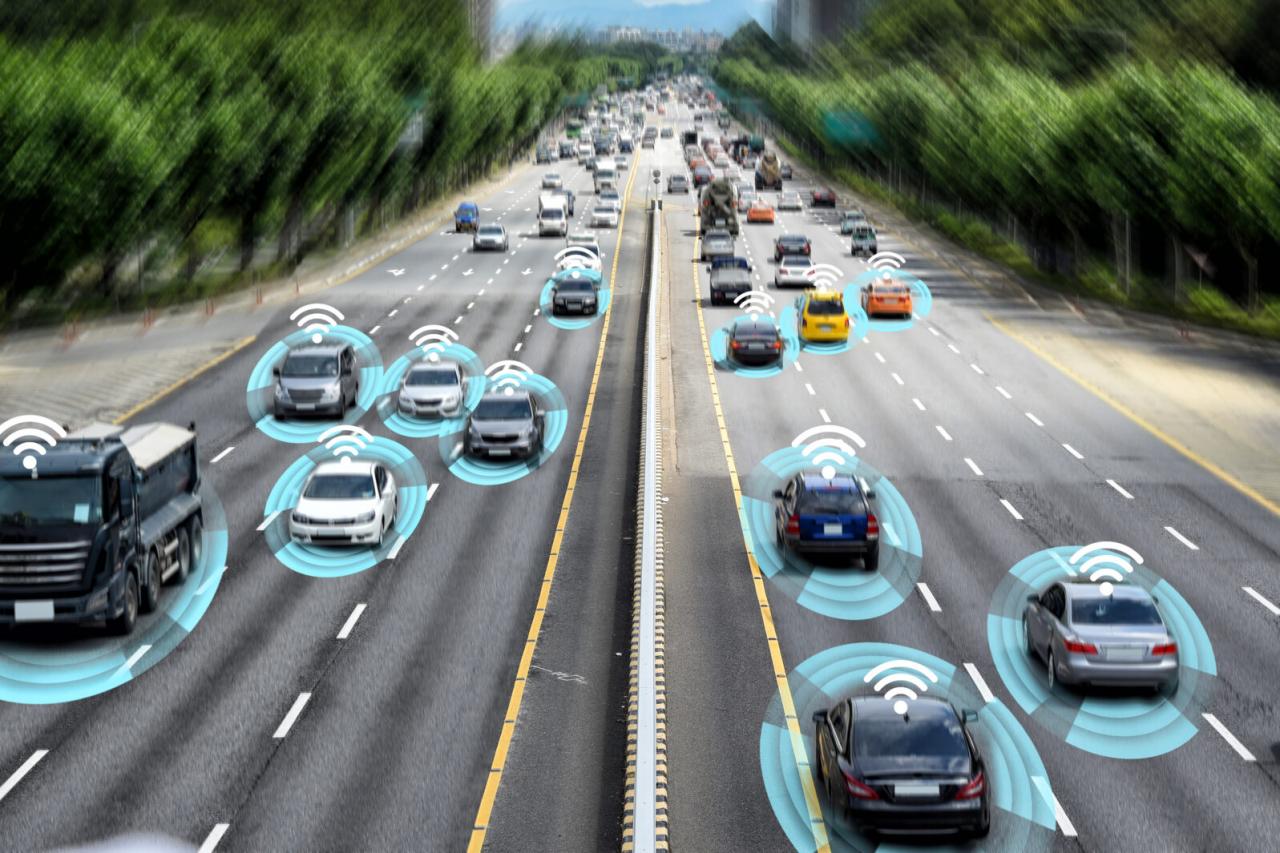
The future of autonomous driving is a connected one. Vehicle-to-Everything (V2X) communication is the key to creating a truly intelligent transportation system. This technology allows vehicles to “talk” to each other (V2V), to traffic lights and road infrastructure (V2I), and to pedestrians and cyclists (V2P). This constant exchange of information can provide warnings about road hazards, optimize traffic flow to reduce congestion, and prevent collisions by anticipating the actions of other road users. This network of communication will be powered by the high speeds and low latency of 5G technology.

Real-World Applications and the Current Market
While Level 5 autonomy is still a dream, companies are already deploying autonomous technology in a variety of real-world applications.
- A. Driver-Assist Systems: Almost all new cars sold today come with a suite of Level 2 ADAS features. These technologies, such as adaptive cruise control, lane-keeping assist, and automatic emergency braking, have become standard and are actively reducing accidents and fatalities on our roads.
- B. Autonomous Taxis and Ride-Sharing: Companies like Waymo and Cruise are operating commercial robotaxi services in select cities like Phoenix and San Francisco. These vehicles are primarily operating at Level 4, meaning they can handle all driving tasks within a geofenced area. While they still require a human remote operator for complex situations, they are providing a glimpse into a future where personal car ownership may be replaced by a seamless, on-demand mobility service.
- C. Autonomous Delivery: Self-driving delivery vehicles are also becoming a reality. From small sidewalk robots delivering food to larger autonomous trucks hauling freight on highways, these applications are demonstrating the commercial viability of autonomous technology in specific, predictable environments.
- D. The Role of the Human: It is important to remember that in a Level 2 or 3 vehicle, the human remains the ultimate safety net. The transition from human control to machine control, and vice versa, is one of the most significant challenges in the industry. As we progress, the driver’s role will shift from a continuous task to one of vigilance and oversight, which can bring its own set of challenges, particularly in maintaining attention.
Navigating the Challenges
Despite the rapid progress, the path to a fully autonomous future is lined with significant hurdles.
- A. Regulatory and Legal Framework: The legal system has not yet caught up with the technology. Questions of liability in the event of an accident, data privacy, and ethical programming of AI are complex and require clear, comprehensive legislation. Who is at fault when an autonomous car causes a crash?
- B. Cybersecurity: With cars becoming connected computers on wheels, they are vulnerable to hacking. A breach could lead to a catastrophic loss of control. The industry is working on robust, multi-layered cybersecurity protocols, but this remains a constant threat.
- C. The “Edge Case” Problem: AI can handle predictable situations with high accuracy, but it struggles with “edge cases”—unusual and unforeseen events that are difficult to program for, such as a traffic cone falling off a truck or a person dressed in an unusual costume. Solving these edge cases is the final frontier for truly driverless technology.
- D. Cost and Accessibility: The sensors and computing power required for Level 4 and 5 autonomy are currently very expensive. For mass adoption, the cost of these components must come down significantly. Economies of scale and technological breakthroughs are essential to make these vehicles accessible to a broader consumer base.
Conclusion
The reality of autonomous driving is a story of incredible progress and persistent challenges. We are living in a world where cars are smarter than ever, with Level 2 driver-assistance systems that are actively saving lives and reducing the stress of daily commutes. At the same time, we are witnessing the birth of a new era, with Level 4 autonomous taxis and delivery services operating in controlled environments, providing a glimpse into a future where personal vehicle ownership is a choice, not a necessity.
The path forward is defined by the convergence of cutting-edge technology: a sophisticated sensor suite that gives the vehicle eyes, a powerful AI brain that makes split-second decisions, and an interconnected communication network that allows it to interact with the world around it. This technological triad holds the promise of a future with zero traffic fatalities, less congestion, and a more equitable and accessible transportation system for everyone, including the elderly and those with disabilities.
However, the journey to a fully autonomous world is not a sprint; it is a marathon. The industry must navigate the intricate complexities of regulation, public trust, and the daunting task of solving the “edge case” problem. The transition will require a new social contract between consumers, governments, and the automotive industry. But the momentum is undeniable. With each new technological breakthrough and each successful pilot program, we are one step closer to a future where driving is not a task but an experience to be enjoyed—a future where the steering wheel becomes an option, and personal freedom is redefined. The dream of autonomous driving is no longer science fiction; it is a reality that is unfolding before our very eyes, and it promises to reshape our world in ways we are only beginning to imagine.
